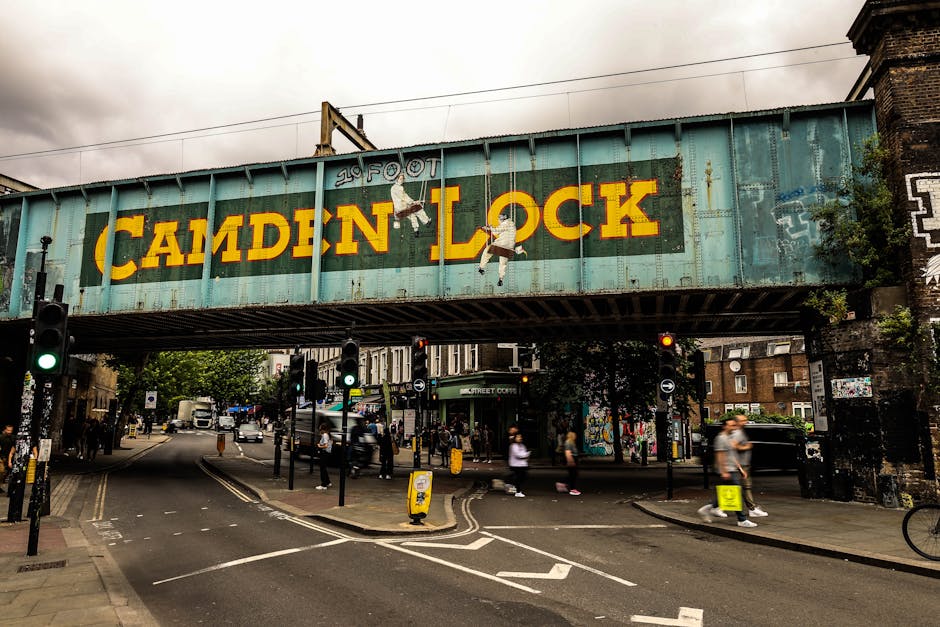
Camden Town house clearance near Mornington Crescent station
If you are arranging a Camden Town house clearance near Mornington Crescent station, chances are you want the job handled quickly, carefully, and without the usual chaos that comes with moving heavy furniture, sorting mixed items, and figuring out what can be reused, recycled, or removed. Maybe you are dealing with a flat that has been lived in for decades. Maybe a landlord needs a property cleared between tenancies. Or maybe you simply cannot face another weekend of lifting old wardrobes down narrow stairs. Fair enough. It happens more often than people think.
This guide breaks down how local house clearance works in practical terms, what to expect, where the costs and risks usually come from, and how to plan the whole thing without unnecessary stress. You will also find a step-by-step process, a checklist, and a few realistic examples from everyday London properties - because truth be told, house clearance rarely looks neat on paper.
Table of Contents
- Why Camden Town house clearance near Mornington Crescent station Matters
- How Camden Town house clearance near Mornington Crescent station Works
- Key Benefits and Practical Advantages
- Who This Is For and When It Makes Sense
- Step-by-Step Guidance
- Expert Tips for Better Results
- Common Mistakes to Avoid
- Tools, Resources and Recommendations
- Law, Compliance, Standards, or Best Practice
- Options, Methods, or Comparison Table
- Case Study or Real-World Example
- Practical Checklist
- Conclusion
- Frequently Asked Questions
Why Camden Town house clearance near Mornington Crescent station Matters
House clearance in this part of North London is not just about removing items. It is about handling a property efficiently in an area where access can be tight, parking can be awkward, and buildings often come with their own quirks. Camden Town and Mornington Crescent sit in a busy, well-used corridor. That means stairwells can be narrow, lifts may be small or absent, and loading a van can take a bit more thought than a standard suburban job.
For many residents and property owners, the timing matters too. End-of-tenancy deadlines, probate timelines, renovation schedules, and sale preparations can all create pressure. A delayed clearance can hold up decorators, agents, or contractors. And if you are living in the property, clutter can make everything feel heavier than it is. One old sofa becomes three hours of faffing before breakfast. No one needs that.
There is also the sustainability angle. A good clearance is not just a rush to the nearest tip. Items should be sorted sensibly so that reusable furniture, white goods, and scrap metal do not end up being treated the same as damaged rubbish. Done well, clearance can reduce waste, save time, and leave the place ready for its next chapter.
If you are also comparing broader local services, it can help to look at related pages like House clearance in Camden, office clearance in London, and rubbish removal in London so you can see which type of service fits your situation best.
How Camden Town house clearance near Mornington Crescent station Works
The process is usually more straightforward than people expect, but only if it is planned properly. In most cases, it begins with an assessment of what needs to go, what should stay, and what may need specialist handling. That may happen through photos, a phone discussion, or an in-person visit for larger or more complicated properties.
Once the scope is clear, the clearance team typically estimates the volume, access requirements, and manpower needed. A one-bedroom flat with a few bulky items is a very different job from clearing a packed family home, a loft full of stored boxes, or a property with difficult parking. In Camden, those details matter more than people think.
The actual clearance day often follows a simple rhythm:
- Arrival and quick walk-through to confirm what is being removed.
- Protection of floors or shared areas where needed.
- Careful removal of furniture, bags, appliances, and loose items.
- Sorting for reuse, recycling, donation, or disposal.
- Final sweep-up so the space is left tidy.
Sometimes the work is completed in one visit. Other times it is split into stages, especially where the property contains mixed contents, sensitive paperwork, or items that need separating first. That is normal. In fact, a staged approach can save time and reduce mistakes.
For readers who need guidance on broader decluttering or post-clearance tidying, the practical advice in decluttering service London and garage clearance London can be useful too, especially if the property includes outbuildings, storage cupboards, or a very full hallway cupboard that has somehow become a museum of old cables.
Key Benefits and Practical Advantages
A well-run house clearance gives you more than empty rooms. It gives you momentum. That is the real benefit. Once the clutter is gone, decisions become easier, cleaners can work properly, and the property starts to feel usable again.
- Time saved: A team can often do in hours what would take you several tiring weekends.
- Less physical strain: Heavy lifting, awkward bends, and stair carries are handled by people used to it.
- Better sorting: Items can be separated properly for recycling or reuse instead of being mixed together.
- Lower stress: You do not need to organise transport, loading, disposal, and multiple trips.
- Cleaner handover: Ideal before sale, rental, renovation, probate, or deep cleaning.
- Local practicality: A team familiar with Camden streets, parking realities, and station-side access is less likely to waste time.
There is also a financial side to think about. A property that is cleared properly can often be prepared for sale or re-let faster, which may reduce delay and make the next stage easier. Not every clearance will save money in a dramatic way, but an efficient one often prevents the hidden costs of doing it badly: missed deadlines, repeat visits, damaged walls, or extra waste charges because things were not sorted properly.
Expert summary: The best house clearance service is not just the cheapest van with a helper. It is the one that combines sensible sorting, careful lifting, good communication, and realistic timing for the property you actually have.
Who This Is For and When It Makes Sense
This kind of service is useful for a wide range of people, and not all of them are in the same situation. That is worth saying, because house clearance gets lumped together as if every job is identical. It is not.
You may need a clearance if you are:
- moving out of a flat or house near Mornington Crescent station
- preparing a Camden property for sale or letting
- managing probate and clearing a relative's home
- renovating and needing old fixtures, furniture, or rubbish removed
- dealing with a long-term accumulation of items after years of storage
- running a landlord turnaround between tenancies
- emptying a loft, basement, shed, or storage area that has become unwieldy
It can also make sense if you only have a partial clearance. For example, perhaps the beds and wardrobes stay, but the kitchen clutter, broken chairs, and a couple of bulky appliances need to go. Partial clearances are common, and they can be more cost-effective when you do not need the whole place emptied.
And yes, sometimes the emotional side matters too. Clearing a family home after many years can be tiring in a very different way from a simple move-out. You may need time to separate keepsakes, paperwork, and sentimental pieces. A good clearance plan leaves room for that. No need to rush the important bits.
Step-by-Step Guidance
If you want the process to go smoothly, it helps to treat clearance as a small project rather than one giant task. Here is the practical version.
1. Walk through the property room by room
Start with a simple inventory. You do not need a perfect spreadsheet. Just make notes on large furniture, bags, boxes, appliances, and anything fragile or sensitive. A few photos help, especially for quotations.
2. Separate what must stay
Move important documents, passports, medication, keys, sentimental items, and anything obviously personal into a safe area. This sounds obvious, but in the rush of a clearance, obvious things do get missed. Often.
3. Decide whether the job is full or partial
Full clearances are best for emptying a property from top to bottom. Partial clearances are better when you are keeping some furniture or only need specific rooms cleared. Be precise. Vague instructions usually cause confusion.
4. Check access and timing
Think about stairs, lift size, parking restrictions, and the likely time needed for loading. Near Mornington Crescent station, local traffic and access conditions can affect the schedule, so allowing a sensible window is wise.
5. Ask how items will be handled
A proper service should explain what happens to reusable items, recyclable materials, and general waste. If you have large electrical items, ask how they are removed and processed. The point is not to overcomplicate it - just to know what is happening.
6. Book with enough buffer
If the property needs to be empty for cleaning, trades, or handover, build in a little extra time. Things always take a bit longer than expected. Not always by much, but enough.
7. Do a final check before the team leaves
Walk through each room and check cupboards, behind doors, under sinks, loft hatches, and storage corners. People forget odd little spaces all the time. The back of a wardrobe, for example, can hide more than you would believe.
Expert Tips for Better Results
Here are the details that tend to make the biggest difference in real life.
- Photograph difficult items: Bulky sofas, built-in shelving, or awkward stair access can be assessed more accurately from images.
- Label anything to keep: A simple sticky note or colour tag saves a lot of uncertainty.
- Tell the team about restrictions: Controlled parking, resident permits, narrow entryways, and concierge rules should be mentioned early.
- Keep papers and valuables separate: Do not rely on memory when the room is half empty and the day is moving quickly.
- Be honest about the volume: Underestimating the amount of stuff usually leads to frustration. Better to say "a bit more than that" than play guessing games.
- Plan for dust and leftover debris: Clearing furniture often reveals dust, old nails, loose bits, and the odd forgotten receipt from 2009.
One thing people often overlook is the emotional pace of the job. In a family clearance, you may need a short pause after certain rooms. That is normal. A good team understands that. It is not just about speed; it is about keeping the process manageable.
For more complex properties, related support such as bereavement clearance London and furniture disposal London can help frame the job correctly before anything is moved.
Common Mistakes to Avoid
Most clearance problems come from rushing, guessing, or assuming everyone means the same thing by "clear the place." That phrase can hide a lot.
- Leaving sorting until the last minute: If you wait until the van arrives to decide what stays, the day gets longer and messier.
- Forgetting access issues: A clearance team can work quickly, but not if they discover a narrow access route only after unloading.
- Mixing keep and remove items: Once items are stacked together, mistakes become far more likely.
- Ignoring special items: Paint, chemicals, batteries, fridges, and fragile equipment may need separate handling.
- Choosing a service only on price: Cheap quotes can be tempting, but if sorting, lifting, and disposal are not clear, the final result may not be worth it.
- Not checking for hidden spaces: Lofts, under-bed drawers, meter cupboards, and storage benches are easy to forget.
There is also a subtle mistake people make: assuming a clearance will make the property instantly ready for every next step. Usually it is a major step, yes, but not the final one. You may still need cleaning, minor repairs, or follow-up waste removal.
Tools, Resources and Recommendations
For most homeowners and landlords, the best tools are basic ones. No fancy kit required. A few practical items can make the process much easier, though.
- Sticky labels or masking tape: useful for marking keep, remove, donate, or check later.
- Phone camera: ideal for recording what is in each room before work begins.
- Basic inventory notes: a notepad is often enough for larger jobs.
- Heavy-duty bags or boxes: useful for grouping loose items that are definitely going.
- Gloves and sensible footwear: especially if you are moving around before the clearance team arrives.
If you are comparing service types, the pages on loft clearance London, basement clearance London, and end of tenancy clearance London are helpful because they show how different spaces create different workloads. A loft filled with boxes is not the same as a single-room turnover. Obvious, maybe, but still easy to miss in planning.
If the property contains bulky appliances or a mix of reusable and scrap items, a proper sorting approach is usually better than simply removing everything in one pile. That extra attention often pays off in time, tidiness, and fewer surprises on the day.
Law, Compliance, Standards, or Best Practice
For a clearance job in Camden, compliance is mostly about responsible waste handling, proper separation of items, and using a service that can dispose of materials appropriately. You do not need to become an expert in waste legislation to book a clearance, but you should expect professional standards.
Best practice usually means:
- items are sorted rather than dumped together without thought
- reusable goods are treated differently from general waste where possible
- electricals and appliances are handled with care
- hazardous or unusual items are identified early
- the property and shared access areas are left tidy after removal
If a clearance includes furniture, white goods, batteries, paints, or unknown materials, mention them before the job begins. That way, the team can plan safely. This is especially relevant in older Camden homes where storage areas can hold years of mixed household contents. Some things look harmless until moved, and that is when everyone suddenly remembers the old tin of mystery paint in the corner.
For landlords, agents, and executors, a documented approach is often sensible. Keep notes on what has been cleared, what remains, and any items set aside for review. It is not overkill. It just keeps things clear if questions come up later.
Options, Methods, or Comparison Table
There are usually a few ways to deal with a clearance, and the best one depends on the size of the job, the timeline, and how much help you want.
| Option | Best for | Pros | Trade-offs |
|---|---|---|---|
| DIY clearance | Very small jobs or gradual decluttering | Low cash outlay, full control | Time-consuming, lifting risk, multiple trips, disposal planning needed |
| Van hire plus helpers | Medium jobs with organised contents | Flexible, can be cost-conscious | You still manage loading, sorting, and disposal logistics |
| Professional house clearance | Full or time-sensitive clearances | Fast, managed, less stress, suited to awkward access | Usually higher upfront cost than DIY |
In practice, many people start by trying to do everything themselves and then realise the bottleneck is not motivation; it is time, lifting, and disposal. That is where a professional service earns its keep. If the property is near Mornington Crescent station and access is awkward, that benefit is even more noticeable.
There is no single perfect method. The sensible one is the method that gets the property cleared safely, on time, and with the least disruption to your week.
Case Study or Real-World Example
Here is a realistic example. A two-bedroom flat near Camden Town had a mix of old furniture, a few appliances, several boxes of books, and assorted general household items. The occupier was preparing to move, but the flat also needed to be cleaned and photographed quickly for the next stage. The main issues were narrow stairs, limited parking, and a couple of heavy pieces that would not fit neatly through the hallway without care.
The useful approach was simple: the client separated personal items first, shared photos of the bulky furniture, and confirmed which rooms were to be cleared completely. On the day, the work was done in sections so that the corridor stayed usable. Reusable pieces were set aside, breakable items were handled separately, and the flat was left ready for cleaning. Nothing dramatic. Just good planning, clear instructions, and a bit of patience.
What made the difference was not brute force. It was clarity. The job would have been messier if the keep/remove decision had been left until the last minute. That is the part people often underestimate.
Another common situation is probate. A family may not want to rush through paperwork, photographs, or keepsakes, so the clearance is staged. First the obvious furniture and waste. Then the personal items. Then the final sweep. It can be a gentler way to work through a property that holds a lot of memory. A little slower, yes. But sometimes that is exactly right.
Practical Checklist
Use this checklist before booking or starting a clearance near Mornington Crescent station.
- Confirm whether you need a full or partial clearance.
- Separate valuables, documents, medication, and sentimental items.
- Take photos of each room, especially bulky or awkward items.
- Note access details: stairs, lift size, parking, loading space, and entry restrictions.
- List any large appliances, fragile items, or unusual materials.
- Decide what should be recycled, reused, donated, or disposed of.
- Set a realistic timescale for the property to be cleared.
- Check whether cleaning, repairs, or decorating will follow.
- Make sure everyone involved understands what stays and what goes.
- Do a final room-by-room check before the team leaves.
Quick takeaway: the clearer your instructions, the smoother the clearance. It sounds almost too simple, but it really is one of the biggest factors in getting a good result.
Conclusion
A Camden Town house clearance near Mornington Crescent station is usually easiest when you treat it as a planned service rather than a last-minute chore. The best results come from clear instructions, realistic timing, and a team that understands local access challenges and the practical realities of North London properties.
Whether you are handling a move, a probate property, a rental turnaround, or a long-overdue declutter, the aim is the same: get the space cleared safely, sensibly, and without making the process harder than it needs to be. That is the whole point, really. You want the weight off your shoulders, the place ready for what comes next, and a bit of peace back in the day.
If you are comparing services now, it helps to review the relevant clearance options, think through the access details, and choose the route that fits your timeline. Small decisions early on make a big difference later.
Get a free quote today and see how much you can save.
Frequently Asked Questions
What does a house clearance near Mornington Crescent station usually include?
It usually includes the removal of unwanted furniture, general household items, loose rubbish, and sometimes appliances or mixed contents, depending on what you agree in advance. The exact scope should always be confirmed before the work begins.
How long does a Camden Town house clearance normally take?
That depends on the size of the property, the amount of contents, and access conditions. A small flat can be handled much faster than a packed house, but awkward stairs or parking can add time even on smaller jobs.
Can I keep some items and only clear one or two rooms?
Yes. Partial clearances are common. You can keep selected furniture, boxes, or personal belongings while removing the rest. The key is to label items clearly so nothing important is taken by mistake.
Is a house clearance the same as rubbish removal?
Not quite. Rubbish removal usually covers waste and unwanted items, while house clearance can include a more structured process of sorting furniture, contents, reusable goods, and disposal. Some jobs overlap, but the approach is often different.
Do I need to be present during the clearance?
Not always, but many people prefer to be there for at least the start of the job, especially if there are keep/remove decisions to confirm. If you cannot attend, clear instructions and access arrangements become even more important.
What should I remove myself before the team arrives?
Take away valuables, personal paperwork, medication, cash, jewellery, passports, and any sentimental items you do not want to risk mixing into the clearance. That small bit of preparation saves a lot of stress later.
How do access issues affect clearance in Camden Town?
Narrow staircases, limited parking, controlled bays, and busy streets can all affect timing and loading. Near Mornington Crescent station, it is worth sharing these details early so the job can be planned properly.
Can items be reused or donated instead of thrown away?
Often, yes, if they are in a suitable condition. Reusable furniture, clean household items, and some appliances may be separated for reuse or recycling where appropriate. The condition of the item usually decides the route.
What happens to electrical items and appliances?
They should be handled separately and processed appropriately rather than treated like ordinary waste. If you have fridges, freezers, ovens, or smaller electricals, mention them in advance so they can be included in the plan.
How far in advance should I book a house clearance?
As early as you can, especially if you have a deadline for moving, selling, or handing back a tenancy. Even a short lead time helps with scheduling, and it gives you breathing room to sort items before the team arrives.
What if the property contains sentimental items or probate contents?
Then it is usually best to slow down and work through the property in stages. Probate clearances often need a little more care, because there may be documents, keepsakes, or items family members want to review first. No rush is better than regret.
How can I compare different clearance options?
Look at scope, access, timing, sorting approach, and how much help you need with lifting and disposal. If you only have a few items, a smaller service may be enough. If the property is full or time-sensitive, a full clearance is usually easier.
What is the most common mistake people make?
The biggest mistake is underestimating the amount of work involved and leaving decisions too late. Once items are mixed together, the job becomes slower and more stressful. A little planning upfront goes a long way.